
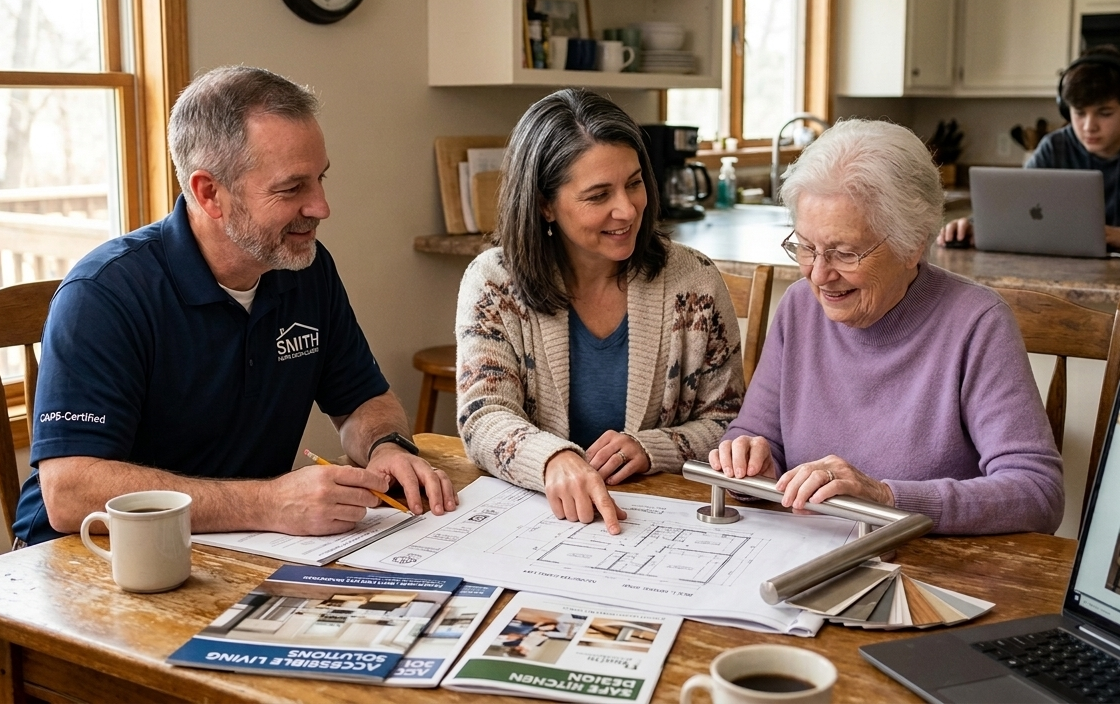
Somewhere in America right now, some Gen X adults are having a conversation they’ve been quietly dreading for months.
Maybe it started with a phone call about a fall. Or a visit home where something felt different — the house a little messier than usual, the parent a little slower, a moment that couldn’t be unseen.
Whatever triggered it, the conversation eventually leads to the same question: What do we do about the house?
That question — and the long, complicated family process that follows — is the defining real estate event of this decade. And the numbers are finally catching up to what aging-in-place specialists have been watching unfold in their own pipelines for years.
NAR’s 2025 Home Buyers and Sellers Generational Trends Report reveals that a record 17% of all home buyers purchased a multigenerational home in 2024 — up from 14% the year before.
One in six buyers. A record high. And a wave that is nowhere near its peak.
The U.S. Census forecasts that by 2034, there will be more people 65 and older than under the age of 18 — for the first time in history. The families navigating that shift aren’t a future demographic. They’re in your market right now, trying to figure out who to call.
The specialists already embedded in those relationships — already trusted, already known — are the ones this moment was built for.
Here’s what the data is actually telling you.
One Transaction, Two People Making the Decision
Most marketing in this niche speaks to the senior. And that’s right — the senior’s preferences, autonomy, and dignity belong at the center of every conversation. Full stop.
But who researched your name as the the real estate professional, read your LinkedIn profile at 10pm after everyone else in the house was asleep, or typed “SRES agent near me” into Google before they called?
Gen X buyers are today’s sandwich generation, purchasing multigenerational homes to accommodate aging relatives, adult children, and for cost savings — often simultaneously, according to NAR Deputy Chief Economist Jessica Lautz.
That Gen X adult child is juggling their own mortgage, their own career, their own family — and now they’re trying to figure out the right move for a parent who may not fully agree with whatever decision they land on.
They’re not just a buyer. They’re a care coordinator who’s been handed a real estate problem on top of everything else.
Your marketing speaks to the senior. Does it also speak to this person? Because in many multigenerational situations, they’re the one who decides which agent gets the call.
Why Standard Follow-Up Email Systems Will Fail This Client
Most agents’ follow-up email sequences are built for a 60-day buyer.
The multigenerational client is not a 60-day buyer.
From the triggering event to the signed contract, this decision can unfold over six months, twelve months, sometimes longer. One sibling wants to modify the existing home. Another wants Mom to move closer to them. The senior changes their mind — not because they’re indecisive, but because the stakes are enormous. This is identity. This is independence. This is the acknowledgment that something has shifted and life will not go back to the way it was.
Overall, buyers in 2024 expected to live in their homes for a median of 15 years, and 25% said they planned to never move again. For aging-in-place buyers, permanence isn’t a preference — it’s the entire point of the decision.
A follow-up system that goes quiet after week three doesn’t just cost you the transaction. It loses the relationship at the exact moment the family needs consistency the most.
The specialists who stay present — who show up consistently with something genuinely useful, whether that’s a check-in call, a relevant resource, or a timely email — during that long middle stretch — aren’t just remembered when the family is finally ready. They become the trusted advisor the family refers to everyone in their circle facing the same crossroads.
The Referral Network Hidden Inside Every Transaction
There’s something about this client that doesn’t show up in the transaction data — and it might be the most valuable part.
When a multigenerational family goes through a successful aging-in-place transition with your guidance, they talk. They tell the friends who are one year behind them in the same situation. They mention you to the estate attorney they consulted. They refer you to the neighbor whose parents are about to need exactly what they just went through.
Gen X shows exceptional loyalty — 91% said they would use their Realtor again and recommend them to others, according to NAR’s 2025 report.
91%.
In a niche where trust is the entire product, that number matters more than any advertising budget.
And the referral web goes further than past clients. Every multigenerational transaction naturally connects you with the CAPS contractor assessing the home, the occupational therapist recommending modifications, the senior move manager coordinating the logistics, the elder law attorney managing what comes next.
Each one of those professionals is serving a different piece of the same family’s journey. Each one has their own clients approaching the same crossroads. The specialists who build intentional relationships across that network don’t just get one family — they get the families that network touches for years.
That kind of pipeline doesn’t maintain itself. But it also doesn’t require a major investment to sustain. It requires consistency. A referral partner who hears from you regularly — with something worth reading — stays warm. One who hears from you only when you need a referral doesn’t.
The Wave That’s Still Building
There is one more number from the NAR report before we close.
Over the past decade, Gen X buyers have grown their share of multigenerational home purchases from 12% in 2013 to 21% today.
The oldest Gen Xers are in their late 50s. Their parents are in their late 70s and early 80s — the age range where the conversations about housing, health, and what comes next become unavoidable.
The wave is still building. The specialists already embedded in those family relationships — already known, already trusted, already showing up consistently — are the ones who will ride it.
The families are out there right now. Some are actively searching. More are still in that long middle stretch, not quite ready but quietly gathering information, weighing options, wondering if they’ll find someone who actually understands what they’re going through.
The question worth asking isn’t whether this client is in your market.
It’s whether they can find you when they’re finally ready to reach out.